
Troubleshooting the batter, the iron, and the timing
Why Your Waffles Went Wrong, and What to Change
Change one variable at a time, cook another batch, and keep the note on the ticket.
Go back to the Classic BatterWhere the problem usually is
Four things cause almost every batch that disappoints
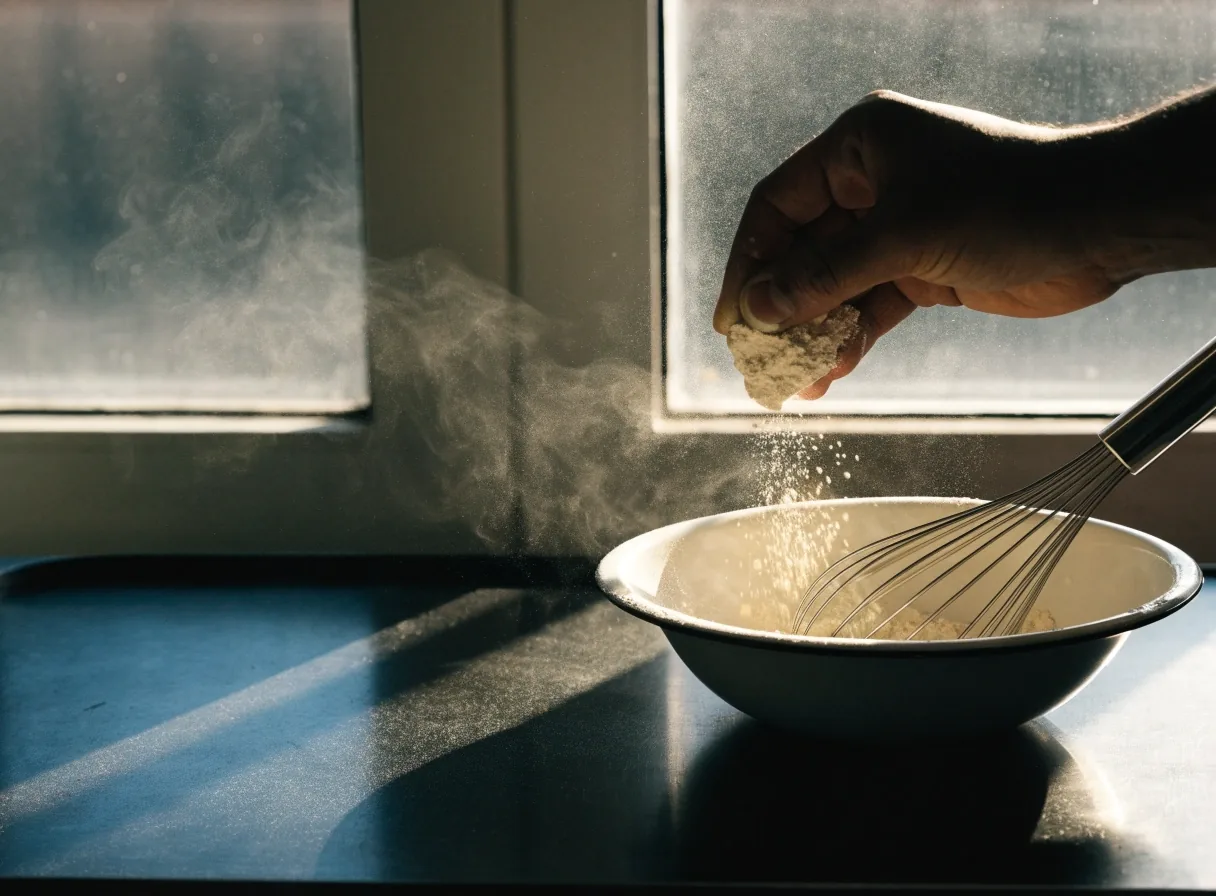
Most waffle problems trace back to four things: batter thickness, mixing time, iron temperature, and steam. Find your symptom below, make one change, and cook another batch. Changing two variables at once makes it impossible to know which one fixed it.
The notes that follow sit in the same order a batch usually fails in: the batter first, then the iron, then the plate itself. If your result is not on this page, the technique walkthrough covers heat and resting in more detail; the classics page holds the ratio, and the contact page is open if a batch keeps behaving oddly.
Change one at a time
Move the flour before you move the heat. Two edits in one batch tell you nothing about which edit worked.
Read the steam
Steam slowing to a trickle is the reliable signal that the inside has set. Time on a clock is a rough guide, not the rule.
Read it against the light
Three browning stages, and what each one tells you
A pale grid and a burnt grid are the same waffle at two ends of one setting. Pull the lid at each stage once so you recognise where your iron sits before you change the batter.
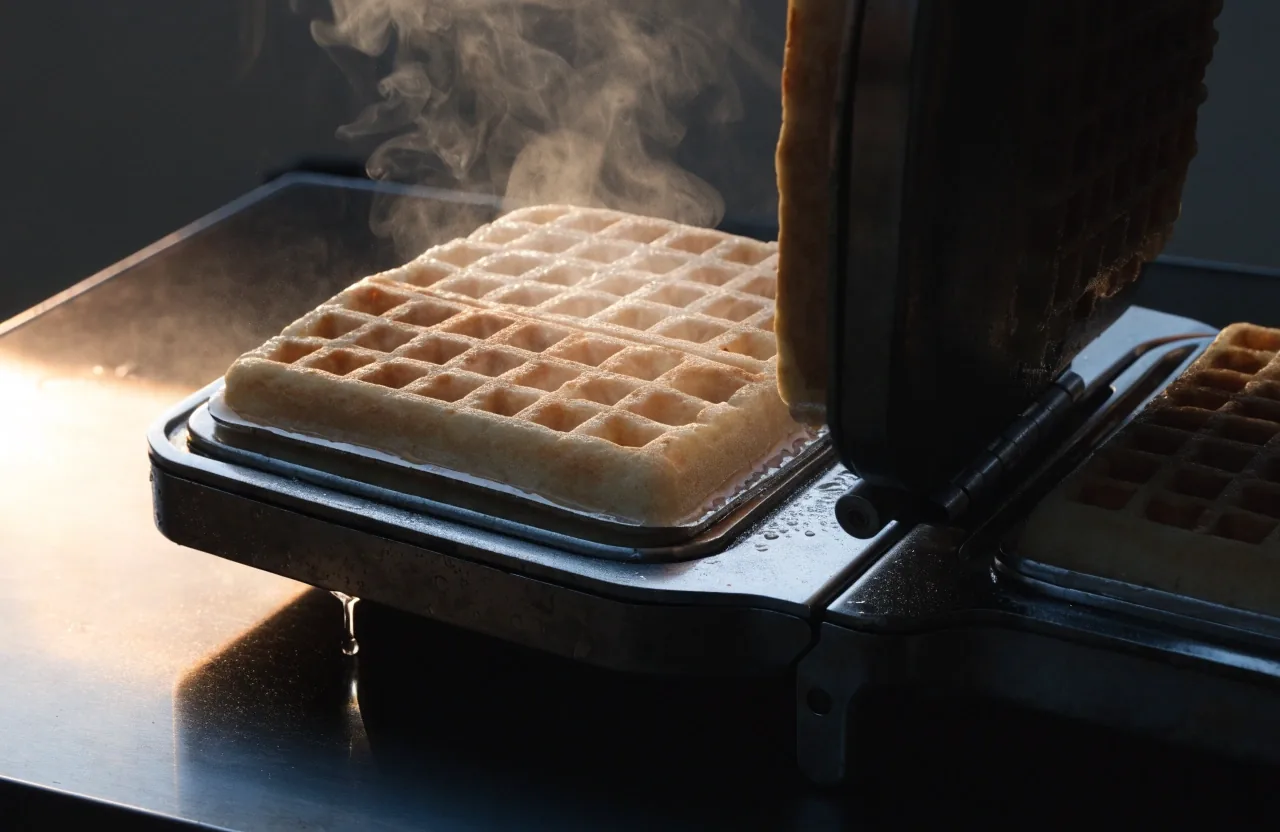
Pulled too soon
Pale and limp
Lid came up before the waffle released. Leave it until the steam thins and the surface stops looking wet.
Set longer, not hotter
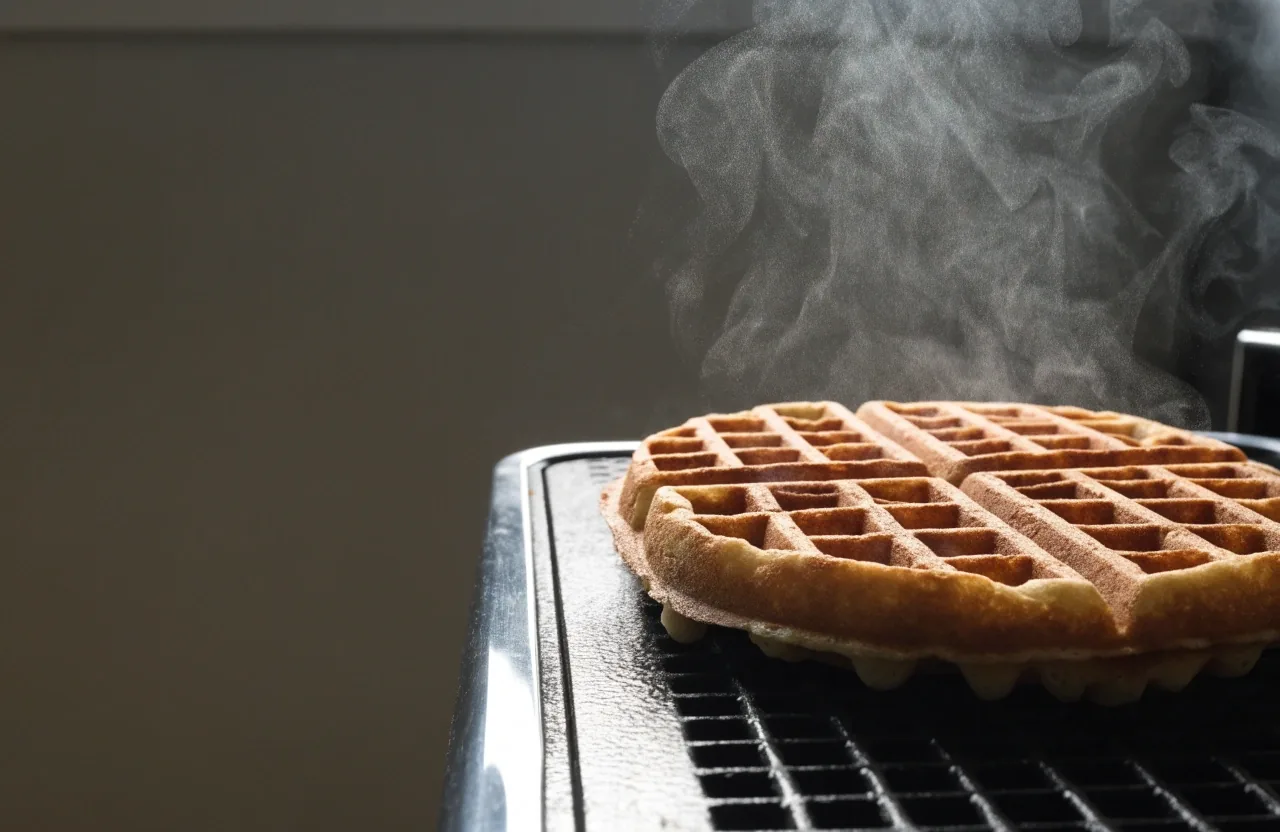
What to aim for
Even gold, crisp edge
Colour across the whole grid with a firm edge and a fluffy interior. This is the setting the ratio page assumes.
Hold this setting
Ran past it
Dark and bitter
The sugars have gone past browning. Scrape the grid, drop the dial one step, and shorten the cook.
One step down, next batch
The most common morning
The batter was right last night and wrong this morning
A batter mixed before bed thickens in the refrigerator overnight, and it thickens further the longer it sits out while the iron heats. That is normal, not a mistake. What you are looking at in the morning is a batter holding more of its flour in suspension than the one you left behind.
Loosen it with milk a tablespoon at a time until it coats a spoon and runs off in a ribbon rather than a stream. Skip water for this. Water thins the batter without adding fa or body, and the waffle comes out tasting washed out even when it looks right on the plate.
Give the loosened batter five minutes on the counter while the iron preheats. It settles again, the flour hydrates evenly, and the first waffle tastes like the second one.
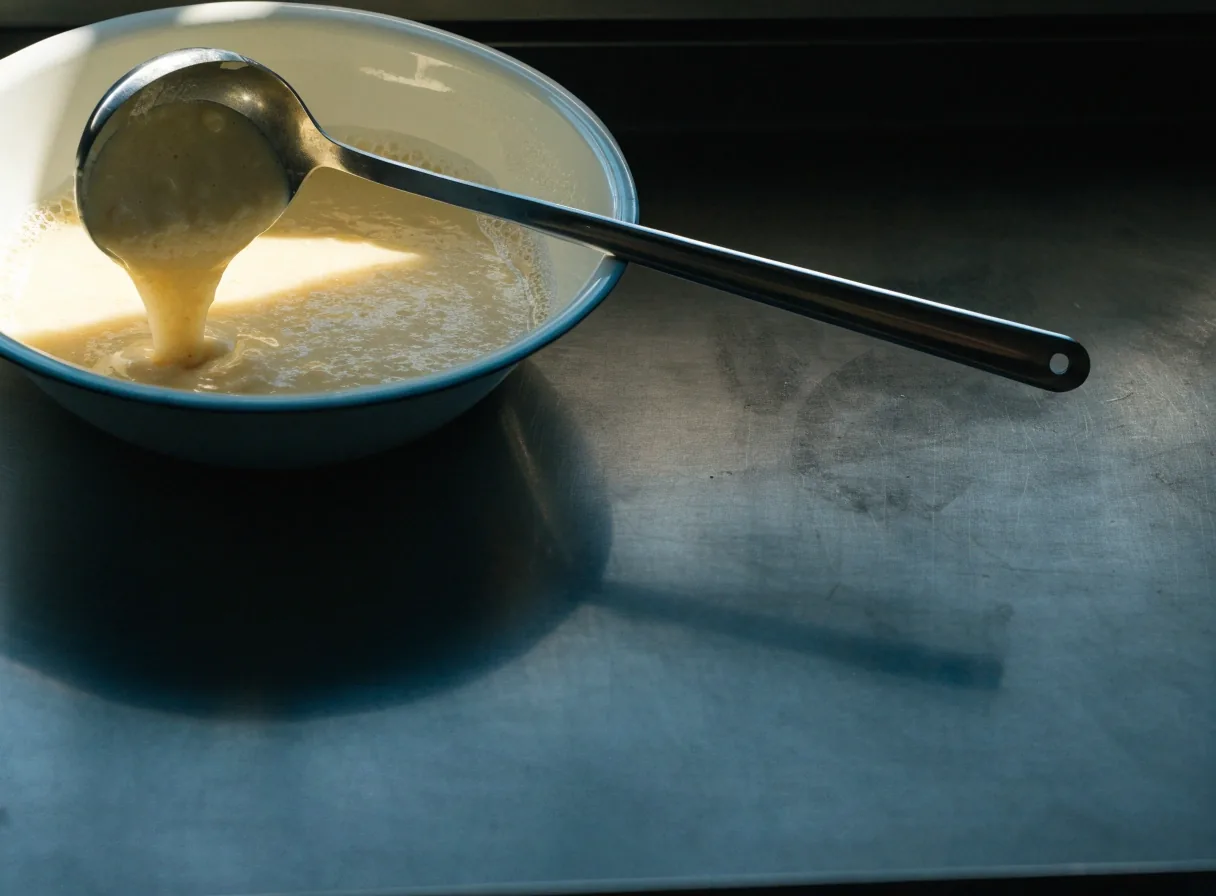
A ribbon, not a stream
Batter that drops in a ribbon is holding together. A stream means too much liquid for the flour in the bowl.
Milk, not water
Milk carries fa and body into the batter. Water thins the texture and leaves a thin, washed-out waffle.
Work down the ticket
Symptom, cause, and the single change to make
Each row below opens in place. Read the cause first, make the one change it names, and cook the next batch before you touch anything else.
Batter consistency
The batter is too thin and the waffles come out flat
Thin batter escapes the grid before it sets, so there is nothing left to rise. The usual cause is too much liquid or not enough flour, and the fix is small: add flour a tablespoon at a time until the batter coats a spoon and runs off in a ribbon rather than a stream.
If the batter looked right when you mixed it and got thin later, it rested too long or sat in a warm kitchen. Stir it and check the consistency again before you blame the recipe.
One change: a tablespoon of flour, then check the ribbon
Spreading and corners
The batter is too thick and will not spread
Thick batter sits in the middle of the grid and leaves the corners pale. Add milk a tablespoon at a time and give it a stir. Do not reach for water: it thins the batter without adding any fa or body, and the waffle will taste washed out.
Overnight batters are the most common source of this. A cold rest thickens the mixture considerably, and an overnight bowl almost always needs loosening in the morning, even when it went into the refrigerator at exactly the consistency you wanted.
One change: milk, a tablespoon at a time, until it pours
Colour and browning
The waffles are pale even at high heat
Sugar and acid are what brown the surface. If your waffles are consistently pale at full heat, add a teaspoon of sugar, or replace half the milk with buttermilk or plain yogurt. Both give the surface something to colour with.
Give the iron a longer preheat as well. A pale waffle is very often a cold-iron waffle, and a home iron can sit well below its stated setting for the first few minutes. Check the dial against a thermometer if you have one, then trust the waffle over the number.
One change: a teaspoon of sugar, or half the milk as buttermilk
Release from the grid
The waffles stick to the grid
Two causes, and they usually arrive together: the iron was not hot enough, and the lid came up too early. A waffle needs to set before it will release, and opening at the two-minute mark almost always tears it down the middle.
Let the steam slow to a trickle before you look. If it still sticks, brush the grids lightly with a neutral oil before the next batch and give the iron a longer preheat. Nonstick coatings wear with use, and an older iron simply needs more help than a new one.
One change: wait for the trickle, then lift the lid
The interior
The centers are gummy
A gummy center means the interior never reached temperature before the outside was done. The batter may be too wet, the iron too hot, or the waffle too thick for the time you gave it.
Try a lower iron setting with a longer cook, and check the batter thickness first. If the batter carries a lot of acidic dairy, it sets more slowly and needs a little more time in the iron; give it thirty seconds and look again rather than pushing the heat up.
One change: lower setting, thirty seconds longer
If two rows seem to describe the same batch, fix the first one and stop. The second fix usually disappears on its own.
Two smaller culprits
Tough and chewy, or simply flat
Both of these come from the bowl rather than the iron, and both are fixed before the batter reaches the grid.
The waffles are tough and chewy
That is overmixing. Stirring past the point where the flour disappears develops gluten, and developed gluten makes a waffle that fights back when you cut it. It also cooks into a tighter crumb, so the outside browns before the inside has finished.
Mix with a spatula, stop while lumps are still visible, and resist the urge to smooth the batter out. Lumps are okay; they cook out in the iron. A batch stirred for twenty seconds and a batch stirred for two minutes look almost the same in the bowl and produce completely different waffles.
Stop while lumps are still visible
The waffles taste flat
Check the salt first. Half a teaspoon in a two-cup batch is enough to make the difference between a waffle that tastes like something and one that tastes like nothing at all, and skipping it makes every other ingredient harder to notice.
Second, check the age of your baking powder. Old powder loses its lift, and the waffle comes out dense without any obvious culprit in the bowl. If both the salt and the powder are fine and the result still tastes flat, the batter likely rested too long at room temperature and lost the lift it had when it was mixed.
Salt first, then the baking powder date
When it is not the recipe
Uneven browning across the grid
If one side of the waffle is dark and the other is pale, that is the iron, not the batter. Home irons have hot spots, and they are rarely in the same place twice across models or even across two years of the same model.
You cannot rotate the waffle halfway through once the lid is closed, so the practical fix is to find the setting where the lightest part of the grid is properly browned, then accept slightly more colour on the hotter side. A waffle browned that way is still better than one cooked at a setting where the pale side stays pale and the dark side burns.
If the pattern is severe and repeats in the same place on every batch, the heating element is likely failing. That is an equipment problem, and no change to the batter will solve it. A new iron, or a service, is the honest answer at that point.
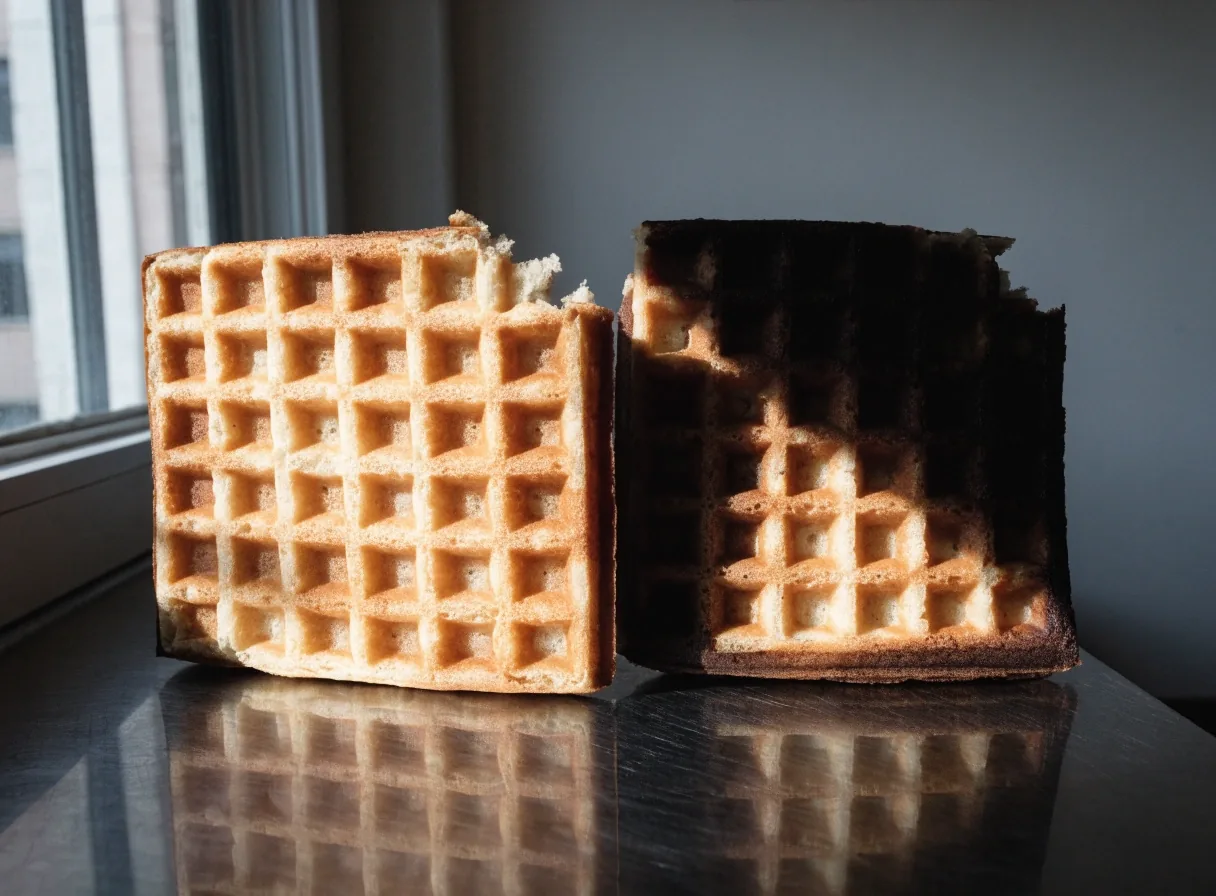
Same batter, same window, two different grids. The recipe did not change between them.
If you change nothing else
The order that fixes most batches
Work down this list from the top. Each step assumes the one above it is already right, so stopping early is fine and skipping ahead is not.
First
Get the batter to a ribbon
Flour or milk, a tablespoon at a time, until the batter coats a spoon and falls in a ribbon. Nothing else on this list matters while the consistency is wrong.
Second
Stop mixing while lumps show
A spatula and a short stir. Lumps are fine; gluten is not. A tight, chewy waffle is the bowl's fault long before it is the iron's.
Third
Preheat the iron properly
Longer than the light suggests. A cold iron makes pale waffles that stick, and it will do both no matter how good the batter is.
Fourth
Wait for the steam to thin
The lid stays closed until the steam slows to a trickle. That signal comes from the waffle itself rather than from the clock on the wall.
Fifth
Taste the batter for salt
A flat-tasting waffle is usually a missing half teaspoon. Check the baking powder date at the same time, then cook the next batch.
Still stuck on a batch? Describe what the batter did and what the iron did, and a note comes back with a next step rather than a guess.
Where to go from here
The ratio page holds the base measure this callout keeps referring to. The technique page covers heat, resting, and holding a finished waffle crisp. The make-ahead page covers the overnight version of this same batter.
A note on the writing here
Every entry on this page has been cooked, failed, and cooked again in the same kitchen with the same iron. If a fix did not work twice, it did not go on the list. Anything that only worked once stays out.