Hailey Rykwalder
Hailey Rykwalder Batter reference
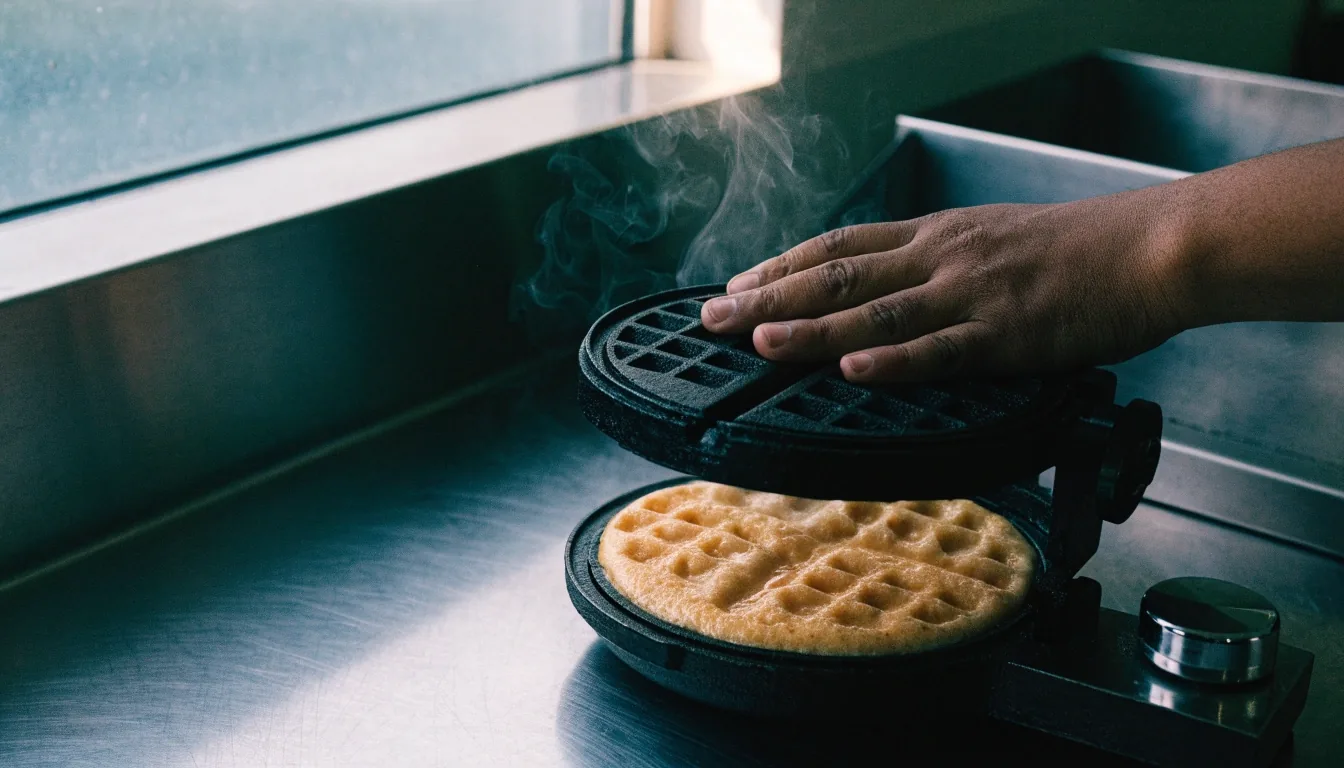
A waffle iron cooking on a steel counter, steam lifting off the seam, chrome dial at rest under raking morning light

Flour · leavening · fa · dairy · egg

Mix it tonight. Crisp by morning.

The baseline diner-style batter, written down once — the ingredient list, the mixing order, and the reason behind each choice, so the first batch comes out right and the tenth comes out the same.

The reference version

The Classic Batter, Explained Step by Step

This page is the reference version of the baseline waffle batter recipe. It is written for the first attempt and for the tenth, because the questions are the same both times: how thin should it be, what does the egg do, and what changes if I use buttermilk instead of milk. What follows is the ingredient list, the mixing order, and the reasoning behind each choice — a homemade waffle house waffles approach you can run every weekend without adjusting anything.

R·01 The ingredient list
  • —Two cups all-purpose flour
  • —Two tablespoons sugar
  • —One tablespoon baking powder
  • —Half a teaspoon salt
  • —Two large eggs
  • —One and three-quarter cups milk
  • —Six tablespoons melted butter or neutral oil, cooled slightly

That is the whole list — no secret waffle house recipe hiding a shortlist of extras behind it.

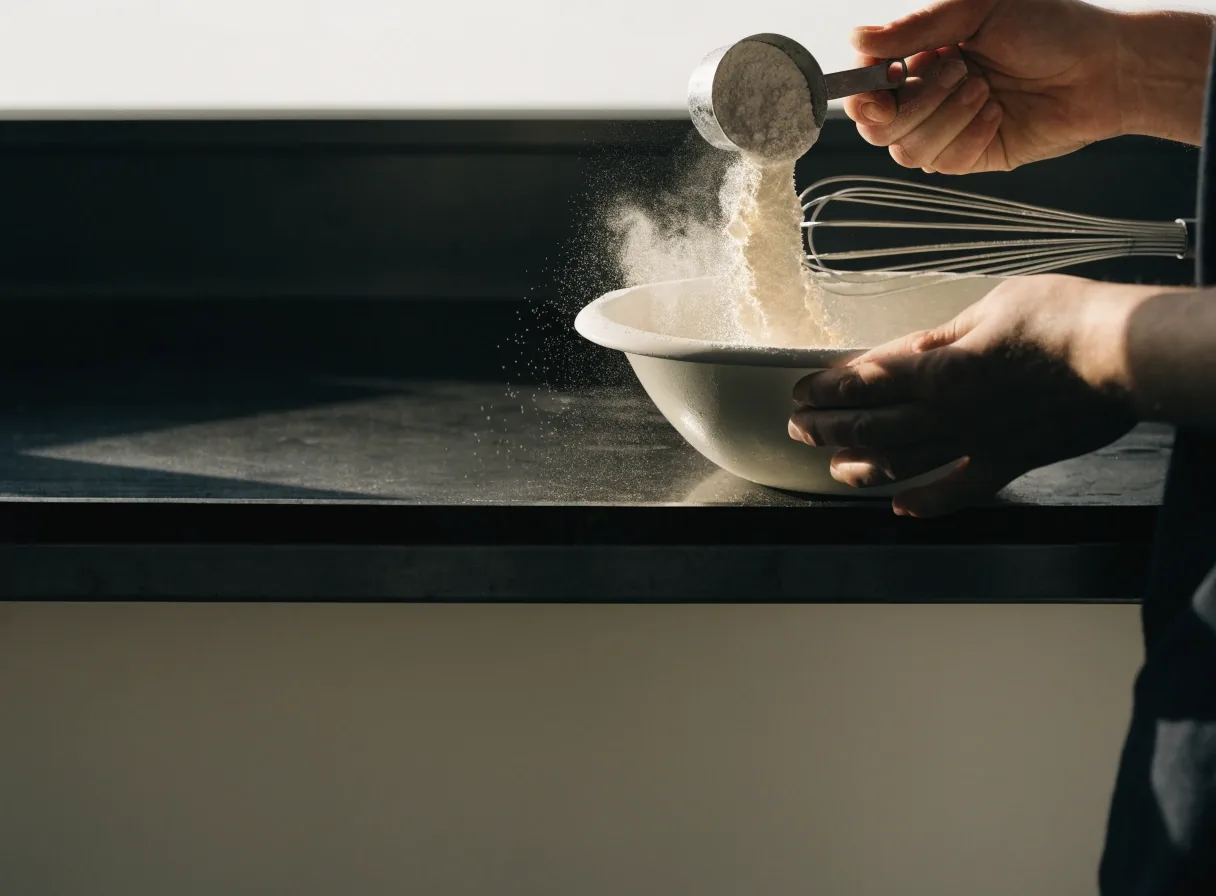
Flour tipped from a scoop into a pale enamel bowl on a black counter, whisk resting at the rim

Cake flour can replace part of the all-purpose flour if you want a more tender crumb; a softer, sweeter waffle comes from pairing cake flour with brown sugar. Swapping all of the flour for cake flour makes a batter that is harder to lift off the grid cleanly, so a half-and-half substitution is the safer move.

R·02 Why these proportions

The flour-to-liquid ratio determines whether the batter pours or mounds, and both extremes cause problems. Too thick and the batter will not spread into the corners of the grid, leaving pale, undercooked patches. Too thin and the waffle sets flat with no rise, because the steam escapes before the structure forms.

Two tablespoons of sugar is enough to brown the surface and hold moisture in the crumb without turning the waffle sweet. Below one tablespoon, the crust takes color more slowly and tastes plainer. Above three, the surface browns before the interior sets — which is how a classic waffle house waffle recipe ends up as a dark shell around a raw center.

R·03 What the egg does, and why it matters how you beat it

Whisked just until the yolk breaks, the egg binds the batter and gives a denser, custard-like interior. Beaten until fluffy and pale, it incorporates air that expands in the iron and produces a lighter waffle. Both are legitimate; they are simply different targets.

Testing this method with and without separating the eggs shows a difference small enough that either way is workable. The practical takeaway is consistency. Choose one method, use it for three batches, and you will know what your waffle is supposed to look like.

R·04 Milk, buttermilk, yogurt, and sour cream

Milk is the neutral base. Buttermilk, yogurt, and sour cream are acidic, and acid does two useful things: it tenderizes by slowing gluten formation, and it reacts with baking soda to add lift. Pairing baking powder with baking soda for a yogurt version gives exactly that lift, and the finished waffle comes out crisp and golden.

If you substitute, replace about half the milk with the acidic dairy, keep the baking powder, and add a quarter teaspoon of baking soda. The batter will be slightly thicker, so be ready to loosen it with a splash of milk.

R·05 Mixing order and the stop signal

Combine the dry ingredients in one bowl and the wet in another. Pour wet into dry. Stir with a spatula until the flour is just incorporated.

Lumps are okay — the simplest waffle recipes say so directly, and it is right. Stirring until the batter is perfectly smooth means you have worked the gluten past the point where the waffle stays tender. Fold the batter together; do not beat it into submission. If you are unsure, stop one stroke early.

R·06 Resting the batter

Ten minutes is the minimum for a noticeable difference, twenty is better, and overnight is a different recipe entirely (see Make-Ahead Batter). During the rest, the flour absorbs liquid and the leavening begins releasing gas. The batter will thicken, sometimes considerably, so stir gently and thin with milk before pouring.

Do not rest the batter in a cold kitchen for hours unless you are deliberately making an overnight batch. Beyond about an hour at room temperature, the leavening loses its first punch and the batter starts to separate.

R·07 Cooking the baseline batter

Preheat the iron fully, set to medium-high. Ladle enough batter to cover about two-thirds of the grid, close the lid, and wait for the steam to slow. A six-serving batch from a standard family recipe makes roughly eight to ten round waffles in a home iron, depending on size.

Cook until the steam is a trickle and the edges look dry, then give it another thirty seconds. Resist opening early. A waffle pulled before it sets will tear and stick, and you will lose the crust you were cooking for.

Scaling · storage

One batch, three shapes

The ratio scales cleanly. Halve everything for two people, double it for a crowd, and keep the milk addition flexible since flour absorbs differently from bag to bag.

Half · standard · double

Scaling the batch

The ratio scales cleanly — halve everything for two people, double it for a crowd. The one thing that does not scale linearly is leavening: a double batch needs slightly less than double the baking powder, or the batter will taste faintly of it. One and a half times the powder for a doubled batch is close enough.

Half batch · two people
¾ tsp powder
Standard · six servings
1 tbsp powder
Double · a crowd
1½ tbsp powder
Fridge · freezer · reheat

Storage and leftovers

Batter keeps in the refrigerator for up to two days in a covered container. Stir it down before each use and expect to thin it. Cooked waffles keep in the refrigerator for three days and in the freezer for about two months if they are cooled completely on a rack first.

Reheat in a toaster or a 350-degree oven — never a microwave, which steams them soft.

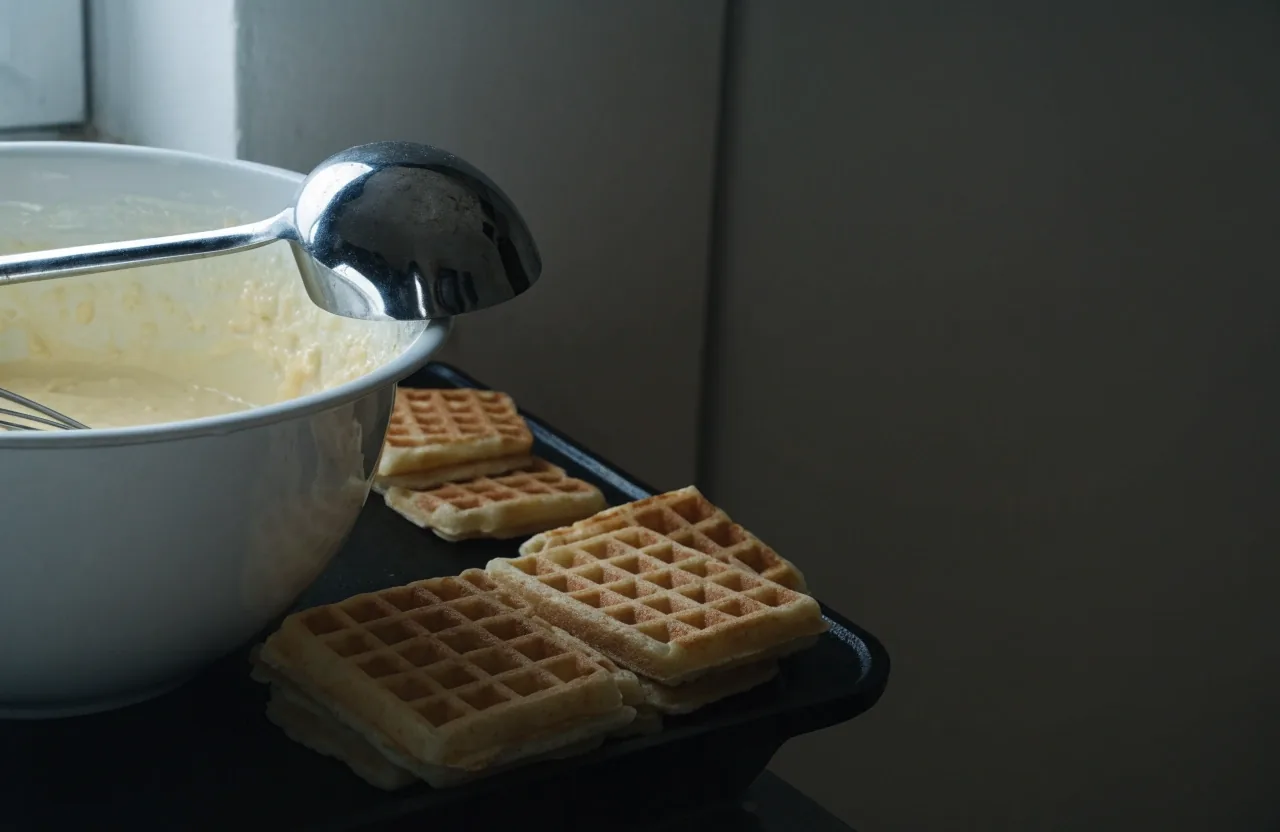
A bowl of rested batter on the cold end of a griddle, ladle at the rim, cooled waffles wrapped flat beside it

The rest window

Ten minutes is the floor.

Once the wet and dry mixes are folded together, the bowl goes still for a beat. “Ten minutes is the minimum for a noticeable difference, twenty is better,” and the reason is simple: during the rest, the flour absorbs liquid and the leavening begins releasing gas. The batter thickens, sometimes considerably, so stir gently and thin with milk before pouring.

Past about an hour on the counter, the leavening loses its first punch and the batter starts to separate — that is the point to move the bowl to the refrigerator, or to commit to the overnight version on the Make-Ahead Batter page.

Measure slip

The classic batter, as a working measure

Read down the left column for the ingredient, the right for the amount and the job it is doing. Keep this open on the counter the first three times.

#All-purpose flour

Two cups. Structure. Cake flour can replace half if you want a more tender crumb.

#Sugar

Two tablespoons. Brown the surface and hold moisture — not a sweet waffle, a well-colored one.

#Baking powder

One tablespoon. Lift. The only ingredient that does not scale linearly — a double batch uses one and a half times the powder.

#Salt

Half a teaspoon. Balances the sugar and reads as fuller flavor in the crust.

#Eggs

Two large. Bind, and set the interior — whisked to break the yolk for a custardy crumb, whipped fluffy for a lighter one.

#Milk

One and three-quarter cups. The neutral base. Substitute half with buttermilk, yogurt, or sour cream and add a quarter teaspoon of baking soda.

#Melted butter or neutral oil

Six tablespoons, cooled slightly. Fat keeps the crumb tender and helps the surface release from the grid.

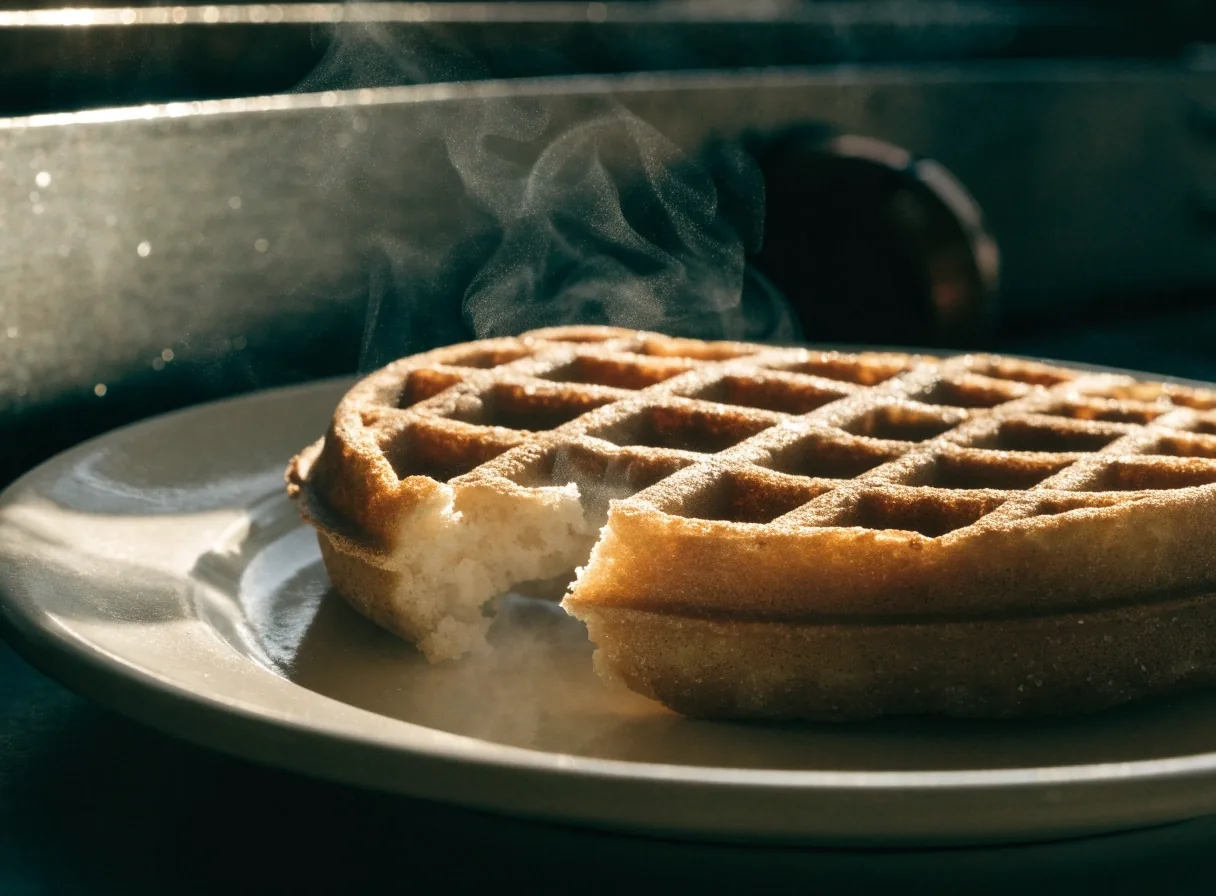
A diner-style waffle torn open on a pale plate, crumb catching morning light, iron dial soft in the background

A six-serving batch, at a glance

Yield — roughly eight to ten round waffles in a home iron, depending on size

Ratio — two cups flour to one and three-quarter cups milk

Rest — ten minutes minimum, twenty better

Heat — medium-high, preheated fully, steam to a trickle before opening

The waffle you were cooking for.

That is the whole baseline — the easy waffle house recipe, made at home, with nothing behind it but flour, leavening, fa, dairy, and egg. Once it holds, the next questions are about the crust, the night-before version, and what to do when a batch goes sideways.

First-batch questions

Answers before the first pour

Three things readers ask before they start. Each answer points back to the row above that covers it.

Is this recipe hard to make?

No. It has seven ingredients and one bowl for the dry mix, one for the wet. The only technique risks are overmixing and underheating the iron, and both are covered above — the stop signal in row five, the preheat in row seven.

Can I use whole wheat flour?

Yes, but substitute half. Whole wheat absorbs more liquid and produces a denser waffle, so add an extra splash of milk and expect a slightly heavier result. The same half-and-half logic that applies to cake flour.

Do I need a stand mixer?

No. A whisk and a spatula are enough. A mixer makes overmixing easier, which is the main thing to avoid — the stop signal matters more than the tool.