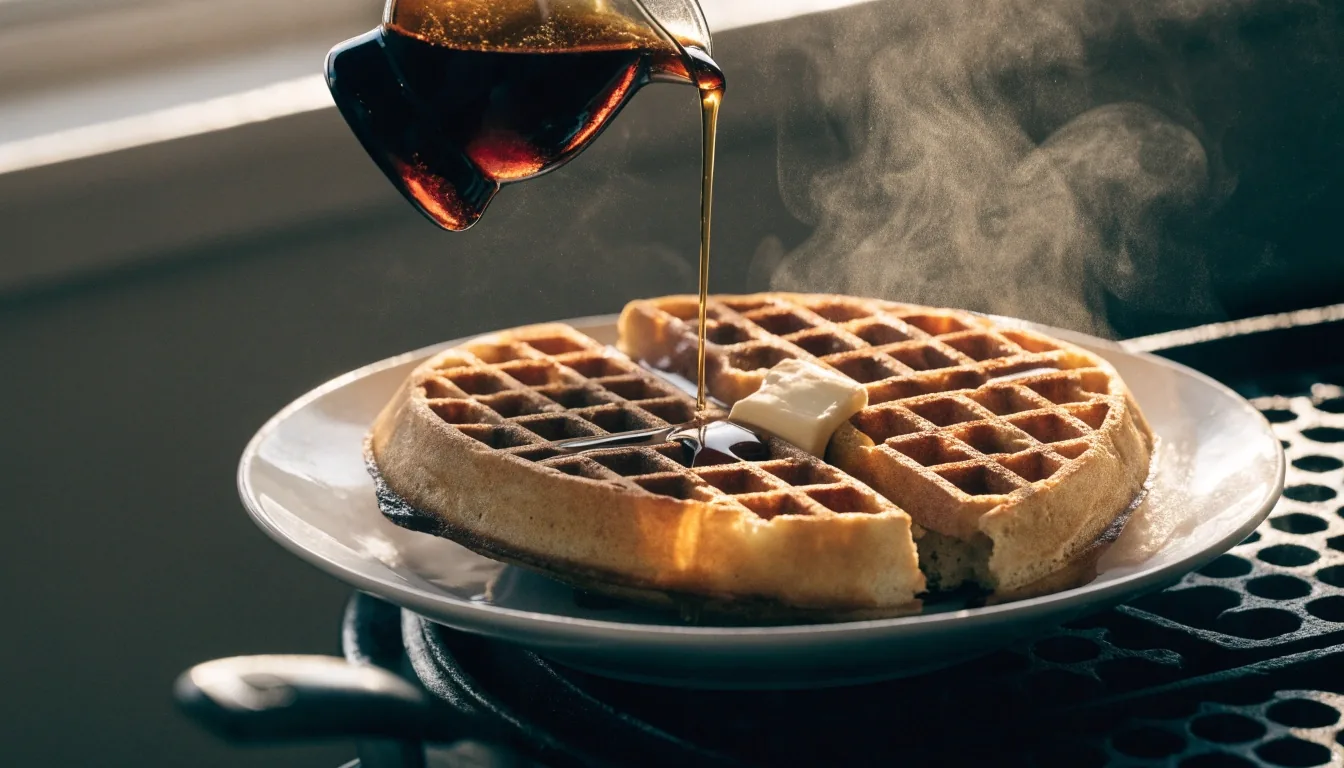
Finish the waffle
Toppings That Work With the Crust, Not Against It
A crisp waffle has a short window. Whatever goes on top should add flavor without adding so much moisture that the crust gives up in the first minute.
That rules out a few popular moves and leaves plenty of good ones. What follows is a short, practical set of finishes, plus how to keep a topping from undoing the work the iron did. Nothing here changes the batter — it protects what the batter already earned: the golden brown outside, the light and airy inside, and the short stretch of time where both of those are still true.
If you are still settling the base, start with the copycat waffle house recipe on the Classic Batter page, then bring the finish back here. Toppings are the last five percent of the work and the first thing anyone notices.
Warm syrup, not cold
Cold syrup chills the surface of the waffle on contact, and a chilled crust stops being crisp. Warm it. Thirty seconds in a small saucepan, or a few seconds in a microwave-safe pitcher, is enough. It does not need to be hot; warm is the target — thin enough to pour, warm enough that it does not shock the surface.
Pour it where you eat
Pour it at the table, not in the kitchen, and pour it over the section being eaten rather than over the whole waffle. A pitcher in the middle of the table also means the second waffle leaves the iron crisp instead of sitting under a pour that already happened.
A thin maple syrup and a thick one behave differently. The thick one sits on the surface and stays put; the thin one races to the plate. Either works, but the thin one wants a shallower pour and a faster fork.
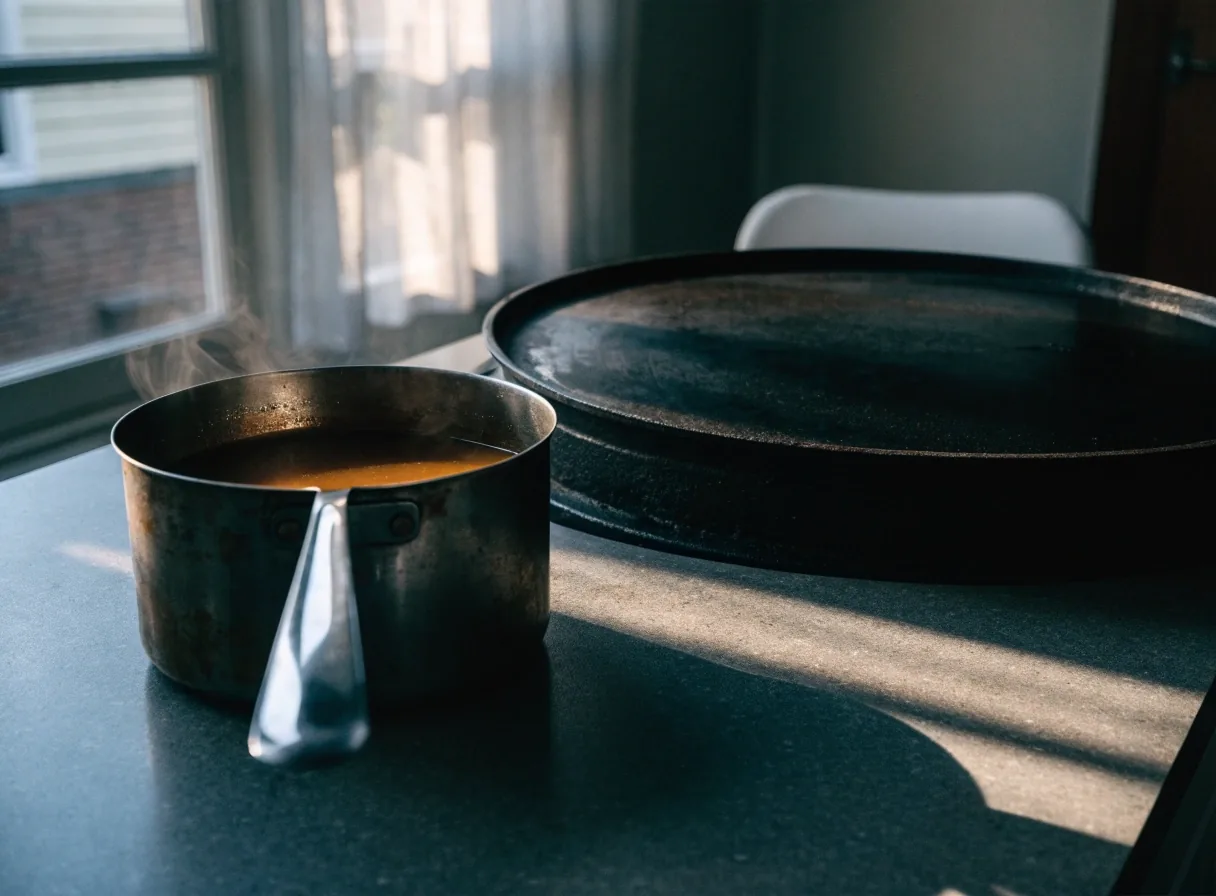
Warming the syrup
Warm a cup of syrup, not the whole bottle. What you warm and do not pour goes back in the fridge and re-thickens; that is fine, but repeated warming dulls the flavor. Warm what the table will use in one sitting.
Keep it off a rolling boil. Syrup that boils hard reduces and turns candy-sweet, which flattens the butter and the buttermilk in the waffle instead of lifting them.
- Target
- Warm and pourable
- Saucepan
- About thirty seconds
- Pour over
- The section being eaten
Butter, and the order it goes on
01
First
Butter on the hot grid
Butter melts into the surface and carries the flavor of the syrup with it. Put it on the moment the waffle leaves the iron, while the crust is still hot enough to take it in.
02
Second
Syrup over the butter
If you put syrup on first, the butter sits on top of the syrup and slides off. Done in this order, the two merge into one glaze instead of two layers.
03
Always
Soft, never cold
A cold pat sits there and cools the waffle while it waits to melt. Leave the butter out for a few minutes, or take a thin slice rather than a thick block.
Fruit that does not water out the crust
Fresh berries placed on top and eaten immediately are fine. Berries left to sit release juice, and the juice goes straight into the crust. If you want berries, either add them at the table or cook them briefly into a sauce so the moisture is already accounted for.
Sliced banana works well and does not release much liquid. Diced apple is better cooked down first. Stone fruit is the same story as berries: firm and just-cut reads fine, soft and sitting reads wet.
Fresh berries
Fine at the table, wet if they sit. Keep them whole and add them on the plate.
Sliced banana
Low liquid, good on a warm waffle, and it takes butter and syrup without turning soft.
Diced apple
Better cooked down first, with a little butter. Raw dice stays hard and drops off the fork.
Stone fruit
Firm and just-cut is fine. Soft fruit gives up juice the moment it touches heat.
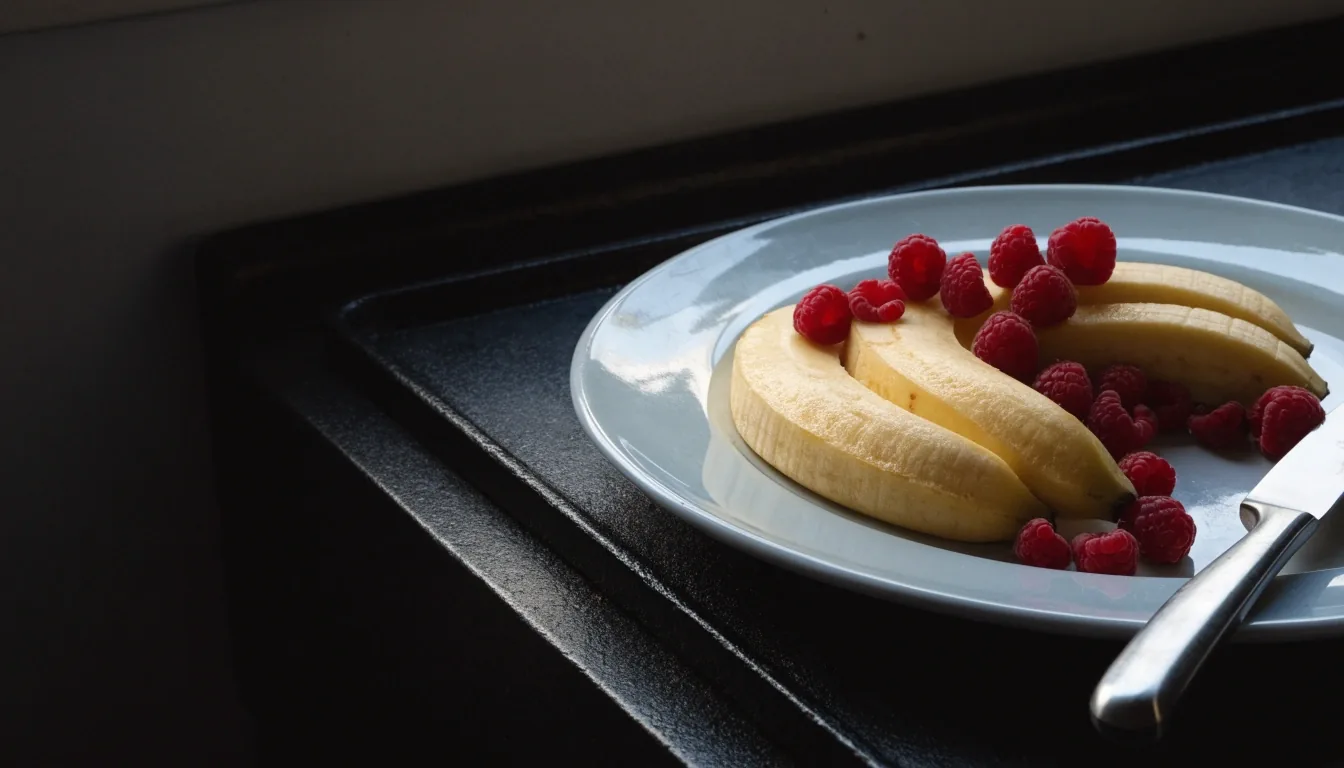
A simple fruit sauce, no thickener required
Simmer a cup of berries with a tablespoon of sugar and a squeeze of lemon for five minutes, mashing lightly. Take it off the heat while it is still a little loose. It will thicken as it cools, and it will be thin enough to pour rather than spoon.
This is the version that behaves best on a crisp waffle, and it is the closest thing here to a DIY waffle house waffles finish you can make from what is already in the fridge. The sauce adds moisture, but not so much that the crust collapses.
Frozen berries work all year and need no changes; there is water in them already, so skip the extra splash you might add with fresh. Taste before you pour — a tart berry wants a little more sugar, and a ripe one wants less.
The five-minute sauce
- Berries
- 1 cup
- Sugar
- 1 tbsp
- Lemon
- 1 squeeze
- Simmer
- 5 min
Pull it while it still runs off the spoon. A sauce reduced to jam will not pour, and a spooned sauce sits on the crust as a layer instead of soaking in.
Whipped cream and other dairy finishes
Whipped cream should be cold and unsweetened or lightly sweetened, and it should go on at the table. Sweetened cream that sits on a warm waffle will melt into a puddle, which is fine for flavor and bad for texture.
If the cream is the point of the plate, keep the waffle thin and hot, add the cream last, and eat it standing up if you have to. A tall pile on a cold waffle is a nice idea that loses on every other count.
Yogurt and sour cream
Yogurt or sour cream thinned with a little honey makes a tangy topping that holds up better than cream on a warm plate. It pairs well with the buttermilk and yogurt versions of the batter — the tang of the batter and the tang of the topping read as one thing rather than two.
Thin it to the consistency of heavy cream. Too thick and it sits like frosting; too thin and it runs off the crust without leaving anything behind.
Unsweetened or lightly sweetened cream keeps the crust crisp longer than the sweet version.
Thinned yogurt on a warm plate holds its shape; cream does not.
A pinch of salt in the cream makes the waffle taste sweeter than more sugar would.
What to skip, and why
Ice cream in big scoops
A small scoop on a hot waffle is a real pleasure, but it should be eaten immediately. A large scoop is a pool of milk by the time you reach the middle.
Thin syrups over the plate
Anything poured across the whole plate soaks the bottom of the waffle before the top gets its share. Pour narrow, on the plate, on what you are about to eat.
Heavy sauces that sit
A thick sauce sits on the crust as a slab and steams underneath it. If you want a thick finish, spread it thin and put it on late.
Still fine
Powdered sugar is fine and does not soften the crust, though it disappears fast on a warm surface — dust it at the table, after the syrup, and accept that half of it will vanish into the steam. A light dusting of cinnamon with it works the same way.
Toppings for a make-ahead batch
If you froze and reheated waffles, the crust is slightly less crisp than a fresh one. That is the moment to lean on toppings with texture: toasted nuts, a sprinkle of coarse sugar, or a spoon of thick fruit preserves rather than a thin syrup.
Nuts should be toasted and cooled before they go on. Raw nuts on a waffle taste like an afterthought. Five minutes in a dry pan over medium heat, then off the heat while they still smell nutty — they keep cooking in the pan if you leave them.
Preserves beat syrup here because they stay where you put them. A thick preserve on a reheated waffle gives the crust something to stand against instead of something to absorb.
Reheat note
Reheat in a dry pan or a toaster, never a microwave, if you can. The pan dries the surface back out; the microwave gives the moisture back to the crust, which is the one thing you were trying to avoid. Plan the batch ahead of time on the Make-Ahead Batter page and the finish gets easier.
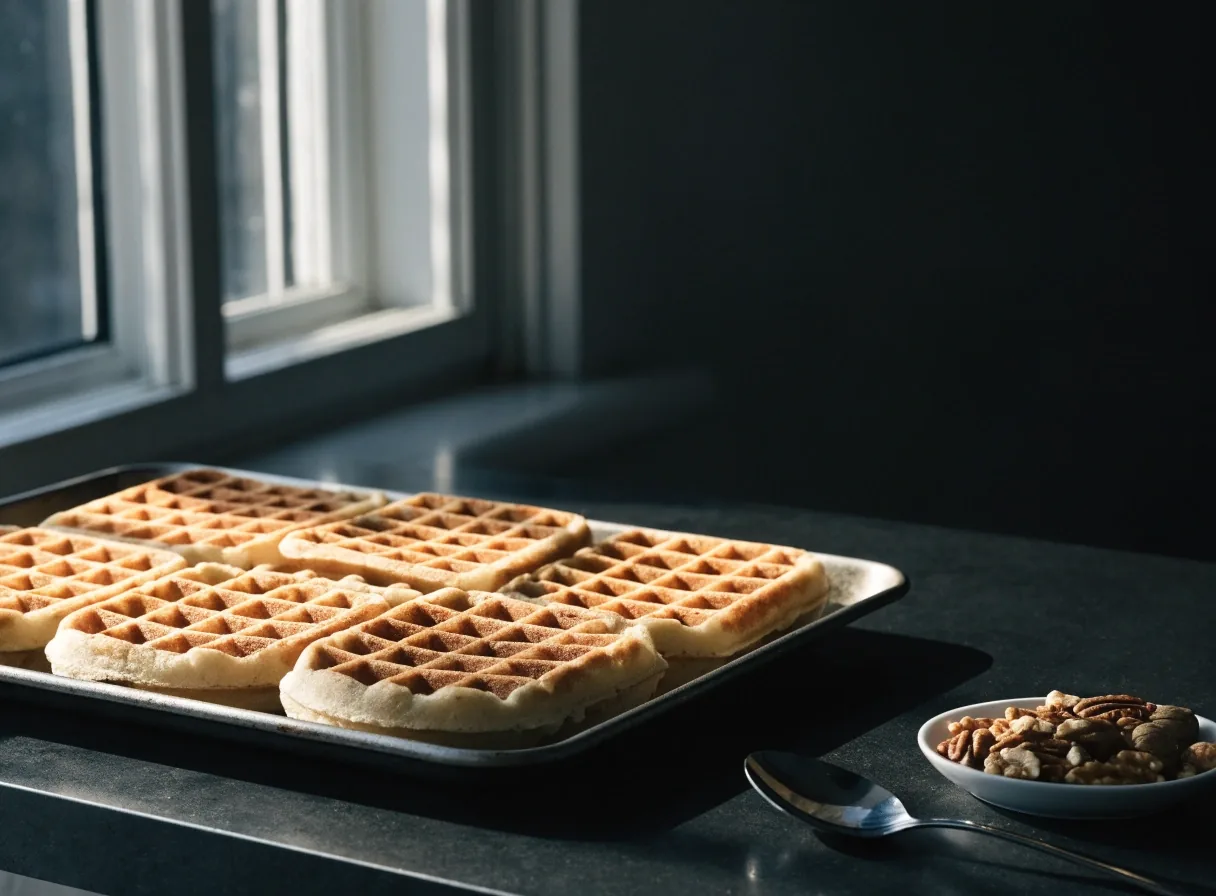
Building a plate that stays crisp
Serve on a warmed plate. Cold ceramic pulls heat out of the waffle from below, and the bottom goes soft first. If you do not have a warmer, run the plates under hot water and dry them right before serving.
Keep the topping additions to two or three things. A waffle buried under five components is a dessert, and it will not be crisp by the second bite. Choose the two that carry the flavor you actually want tonight and let the crust be the third.
If you are working through the classic waffle house waffle recipe at home and the crust still is not holding, the problem is usually up the chain rather than on top. Thick batter, a cold iron or a short rest all cost more crispness than any topping can give back — the Troubleshooting page walks through those in order.
Two or three, not five
-
Pick one fa and one wet thing — butter plus syrup, or thinned yogurt plus a fruit sauce.
-
Add texture only if the crust is already a little soft — nuts, coarse sugar, a crisp edge of the waffle itself.
-
Add everything at the table, in the last thirty seconds, on the piece being eaten.
Bring the finish back to the batter
A good topping cannot rescue a waffle that never got crisp. The batter, the rest and the iron do that work — the finish just protects it. Start with the recipe, then come back here for the last step.