Hailey Rykwalder
Hailey Rykwalder
A diner-style waffle iron mid-cook on a steel counter, steam rising from the seam under raking morning window light.

Make-ahead base

Mix it tonight.

Crisp by morning. The split-mix method — dry in one bowl, wet in another, held in the fridge — is the whole trick behind waffles that taste developed instead of rushed.

Rest overnight

Batter in the Fridge, Waffles by Morning

Waffles have a timing problem. Batter benefits from a rest, but the person making breakfast usually wants it done in twenty minutes. The fix is to split the work: mix the batter the night before, cook it in the morning while the iron heats. This page covers the overnight method, plus how to freeze finished waffles so they survive until next weekend.

It is the same math a home cook runs for the classic batter recipe — one mix, two mornings of output, with no extra shopping list required.

A

Flour hydrates fully

The overnight rest gives the waffle a more even crumb and drops the raw-flour taste that a rushed mix carries into the first pour.

B

Leavening cools off

The leavening starts working early and then slows. Expect a little less first-pour lift and a bit more flavour than a fresh mix.

C

Thicker in the morning

Stir it down, then thin with milk a tablespoon at a time until it pours in a ribbon again. That is normal and expected.

Night to morning

The Overnight Method, Step by Step

This is the same method behind the DIY waffle house waffles at home you may have read about — the difference is that it trades the extra leavening for a longer rest, and the rest does the work.

  1. Step one

    Split the bowls

    Mix the dry ingredients in one bowl and the wet in another the night before. Keep them apart until you are ready to combine.

  2. Step two

    Combine, do not whip

    Stir just until the flour disappears. Lumps that vanish in a few strokes are fine; a smooth bowl is what you want before the rest.

  3. Step three

    Cover and chill

    Cover the bowl and refrigerate. Do not add extra leavening to compensate — the overnight batter does not need it.

  4. Step four

    Warm, thin, pour

    In the morning, take the bowl out while the iron preheats. Stir gently, thin with milk, and pour. The warm-up takes about as long as the batter needs to come back to a pourable consistency.

One small add

Restore the lift, if you want it

Because the leavening has already spent itself somewhat by morning, half a teaspoon of baking powder stirred in just before cooking restores most of the rise. It is not required — the overnight batter behaves on its own — but it is the move that makes overnight batter pour like a fresh mix.

Add

Half teaspoon of baking powder

Stir it in just before the first pour. Works in any overnight batter, whether the base uses milk or a cultured dairy.

Do not add

Baking soda, unpaired

Soda needs acid. Without buttermilk, yogurt, or sour cream in the batter it leaves a soapy taste. If the base carries acid, soda is fair game.

Cold rest

Overnight is a rest, not a wait

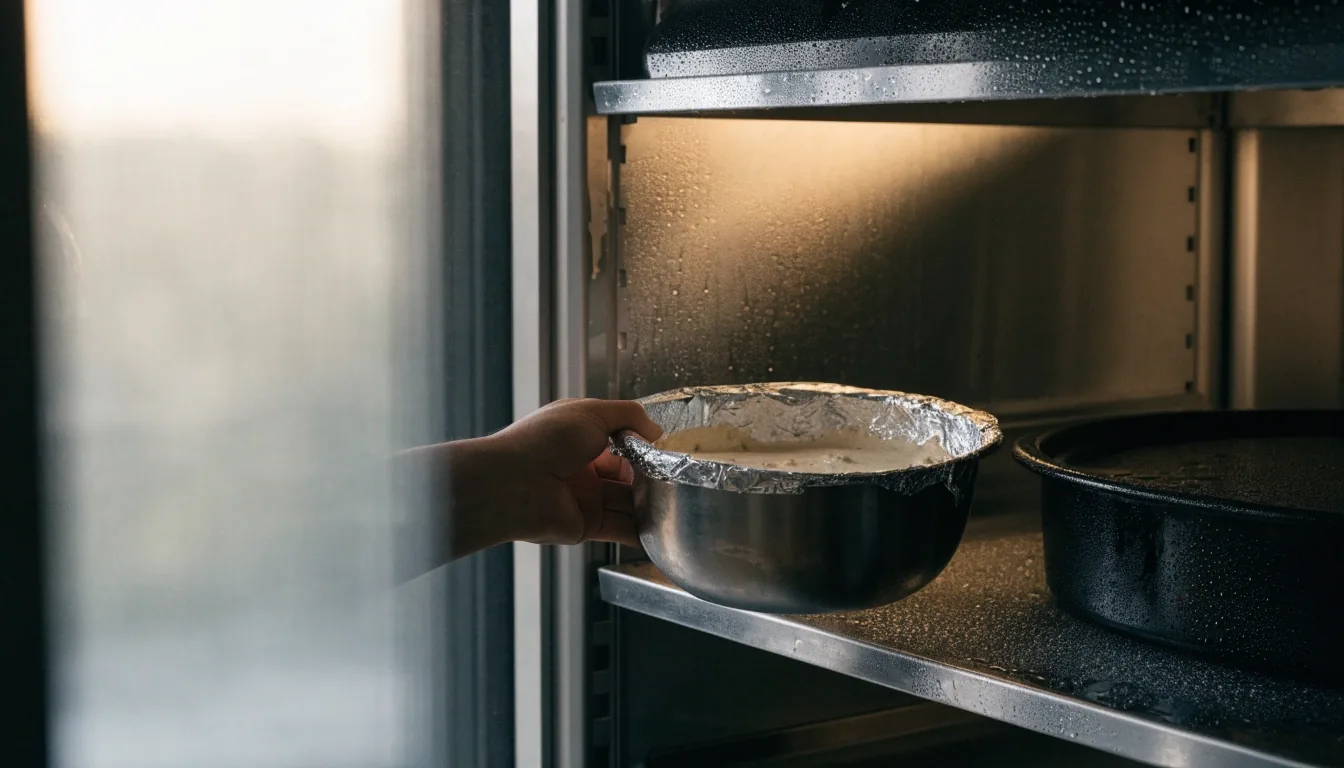
A covered bowl on a cold shelf is the whole scene. The batter does its own work while the kitchen sleeps, and the only thing you have to do in the morning is thin it back to pouring consistency and heat the iron.

That is the make-ahead batter promise in plain words: no alarm-clock cooking, no two-bowl panic at breakfast, no burned first pour because the iron was not up to temperature.

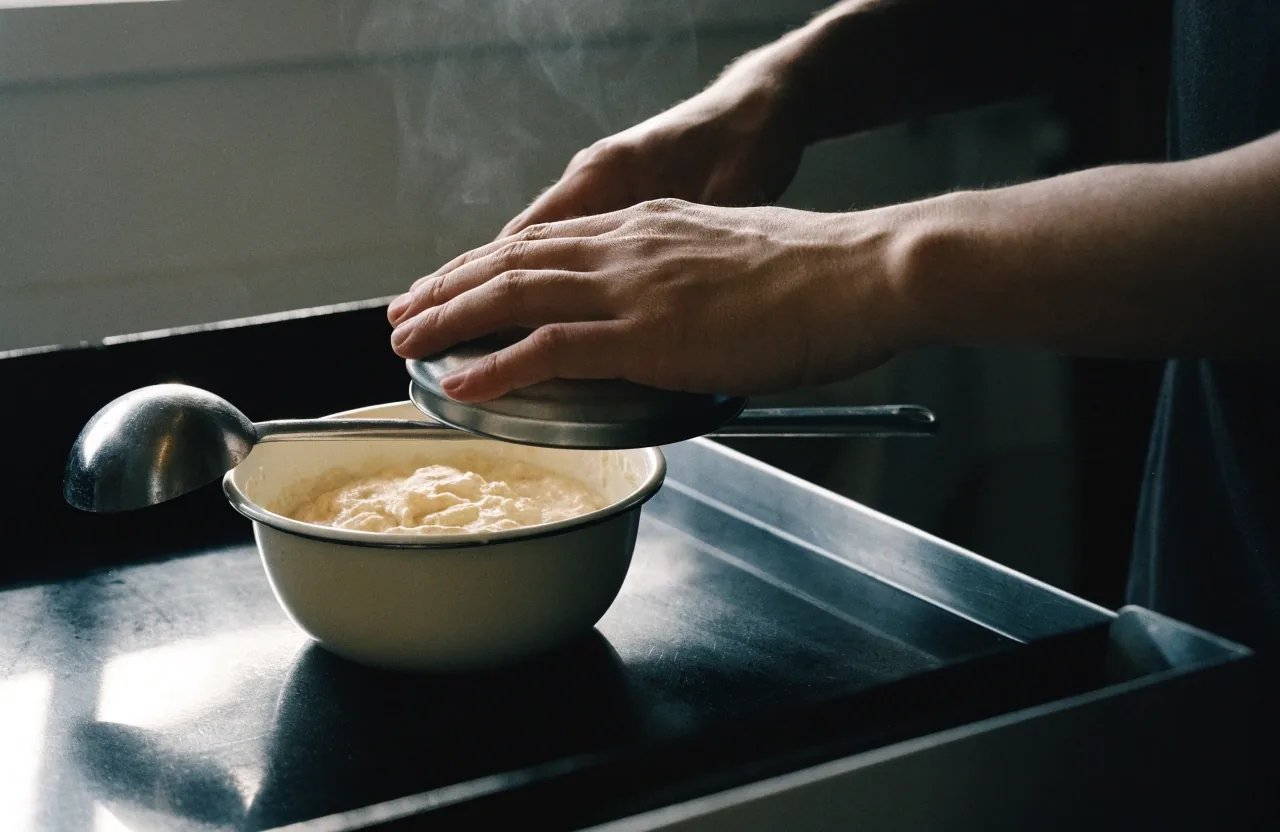
A pale enamel bowl of waffle batter on the cold end of a griddle with a chrome ladle across the rim.

Freezer-friendly

Freezing Finished Waffles

This is the part that turns one Sunday into four breakfasts. Done right, a frozen waffle reheats crisp and keeps its grid pattern; done in a hurry, it comes out as a gummy stack that no amount of toasting fixes.

Cool flat first

Cool every waffle completely on a wire rack. Warm waffles put into a bag create their own steam and freeze into a soft, gummy stack.

Freeze, then bag

Once cool, freeze them flat on a sheet pan for an hour, then move them into a freezer bag or container. Frozen flat, they will not stick together and can be pulled out one at a time.

Freezer hold

About two months

Beyond that they start to pick up freezer odours, which toasting will not remove.

Fridge hold

About three days

Cooked waffles, wrapped airtight, hold well three days but lose their crust after the first one.

Batter hold

Up to two days

Covered in the fridge. Past that window it starts to separate and taste flat.
Reheating

Reheating without sogging them

Dry heat is what brings the crust back. Wet heat is what turns a waffle into a pancake with a grid on it.

Method

Time and result

Toaster or toaster oven

The best tool. Dry heat hits both faces, brings the crust back, and takes the same few minutes a slice of bread would.

Rack in a 350° oven

Works for a batch. About eight to ten minutes from frozen, directly on the rack so the underside dries instead of steaming.

Microwave

The one method that consistently fails. It heats the water inside the waffle and softens the crust with no way to recover. If it is your only option, follow with thirty seconds in a hot pan to dry the surface.

Same rule the crispy technique page uses on a fresh iron: dry surface, dry heat, no lid.

Two different things

Refrigerated batter versus refrigerated waffles

Same appliance, two shelf lives. Keep the windows straight and you will not waste a batch or serve a stale breakfast.

Batter

Covered, two days

Batter holds in the refrigerator for up to two days in a covered container. Past that it starts to separate and taste flat, even though it is still safe to cook.

Waffles

Wrapped, three days

Cooked waffles hold in the refrigerator for about three days before the crust reads stale. If you made a double batch, freeze half the waffles rather than leaving them in the fridge.

Weekend math

Scaling for a weekend

A double batch of the baseline batter makes roughly sixteen to twenty round waffles, which is more than a family eats at one sitting. The practical move: cook what you need, freeze the rest flat, and keep the remaining batter in the fridge for the next morning.

If you are feeding a crowd across two days, mix one full batch each night instead of one giant batch. Fresh leavening on day two is worth the extra bowl.

One batch, one night

Cook a single round of waffles, hold the leftover batter for tomorrow. Best for a small household.

One batch, each night

Two remixes across two mornings. Fresher lift on day two, one extra bowl on night two.

Watch the mix

Ingredients that behave badly overnight

Acid and soda

Metallic edge on buttermilk

Batters with a lot of baking soda and acidic dairy can develop a faint metallic edge after a long rest if the ratio is off. If your overnight buttermilk batter tastes off in the morning, the soda is too high. Cut it back or mix that version fresh.

Fresh fruit

Turns the batter gray

Fresh fruit folded into the batter does not survive an overnight rest well. It releases water and turns the batter gray. Add fruit at the griddle, or keep it for the topping — the toppings and syrups guide has a few that hold up after reheating.

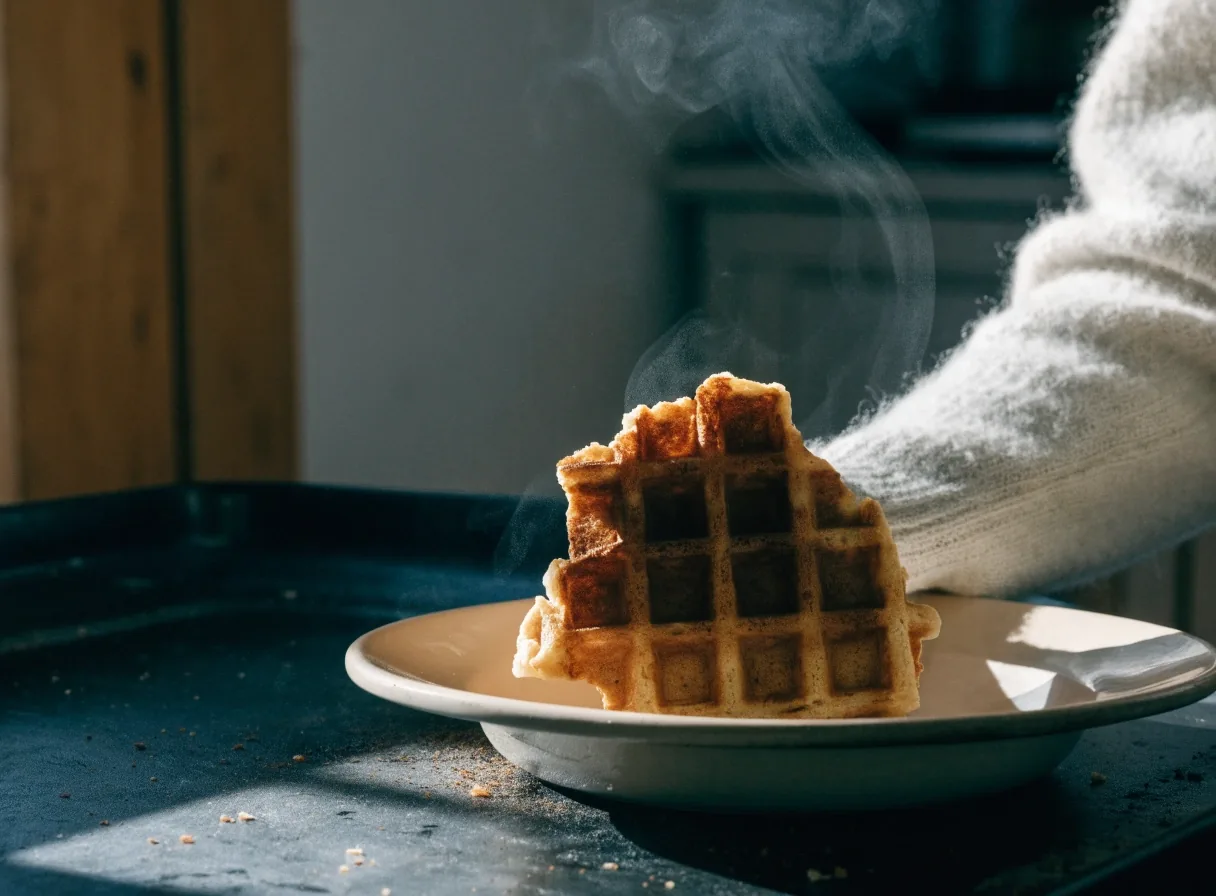
A single diner-style waffle torn open on a pale plate, steam rising, warm light across a black counter.

Next breakfast

The overnight batter is the same mix — it just waited

If you mixed the classic batter at seven in the evening and poured it at eight the next morning, you already made a homemade waffle house waffle at home — just one that took a night to get there. Nothing else changes: the ratio holds, the iron heats the same way, the crust comes back the same way.

Where to go next: mix the base, follow the crispy finish, or read the test-kitchen notes on how this timing window holds up in a home kitchen.

If something goes sideways

When the make-ahead batch does not behave

A batter that pours thin, a waffle that sticks, a centre that stays gummy — the troubleshooting page works through the common overnight failures in the order they show up at the iron. Start there before you throw a batch out.

Hailey Rykwalder — 6955 23rd Ave SW, Seattle, WA 98106 — MarioJose@haileyrykwalder.com

Counter notice — 01

This site uses cookies to see which recipes get cooked. Nothing leaves the kitchen. Read the cookie policy